How to Choose an AI Development Company: A Practical Guide
Artificial intelligence can help businesses automate repetitive work, improve customer experiences, analyze complex data, and build new digital products. However, turning an AI idea into a reliable business solution requires more than choosing a model or connecting an API.
The AI development company you choose can influence your product's performance, security, scalability, development cost, and long-term maintenance.
Some providers specialize in basic chatbot integrations, while others can build complete AI applications involving large language models (LLMs), retrieval-augmented generation (RAG), AI agents, data pipelines, and enterprise integrations.
This guide explains how to evaluate AI development companies, what questions to ask before hiring, how to compare proposals, and which warning signs to look for before committing to a project.
What Does an AI Development Company Do?
An AI development company helps businesses design, develop, integrate, and maintain software powered by artificial intelligence. The scope can range from adding an AI feature to an existing application to building an entirely new AI-powered platform.
Depending on your requirements, services may include:
- Custom AI application development: Building software around specific business processes and user needs.
- Generative AI development: Creating applications that generate text, images, summaries, or other content.
- AI chatbot development: Developing conversational assistants for customer support, internal knowledge, and business operations.
- RAG development: Connecting language models to company documents, databases, and other trusted information sources.
- AI agent development: Building systems that use tools, APIs, and defined workflows to complete multi-step tasks.
- AI automation: Integrating AI into existing business processes to reduce repetitive manual work.
- Machine learning development: Creating predictive models, classification systems, recommendation engines, and forecasting solutions.
- AI integration and optimization: Improving existing AI systems, controlling costs, and addressing performance or reliability issues.
Before contacting providers, identify which capabilities your project actually needs. A well-designed workflow with a few carefully selected AI features may be more effective than an unnecessarily complex multi-agent system.
1. Define Your Business Goals Before Hiring
The first step is to understand the problem you want AI to solve.
Starting with technology rather than business requirements can lead to expensive prototypes that demonstrate impressive capabilities but fail to deliver measurable value.
Write down the following before evaluating companies:
- Business problem: What process, cost, or customer challenge are you trying to address?
- Target users: Who will use the solution, and how frequently?
- Required functionality: What should the system do, and which tasks must remain under human control?
- Available data: Do you have documents, databases, historical records, or other information the system can use?
- Success metrics: How will you measure accuracy, response time, cost savings, conversion rates, or productivity?
- Budget and timeline: What resources are available for development, deployment, and ongoing support?
For example, a company that wants to answer questions from thousands of internal documents may need a RAG-based knowledge assistant. A business that wants to process invoices may need document extraction, validation rules, workflow automation, and a human approval process.
These requirements help you evaluate whether a provider understands your business problem rather than simply recommending a fashionable AI technology.
2. Evaluate the Company's AI Engineering Expertise
Not every software development company has the experience required to deliver production-ready AI applications.
Look beyond general claims about artificial intelligence and examine the technical capabilities relevant to your project.
Large language models and generative AI
If your application uses an LLM, ask how the team handles model selection, prompt design, structured outputs, context limits, model evaluation, and fallback behavior.
A capable team should explain the trade-offs between different models, including their quality, latency, cost, and data-handling requirements.
Retrieval-augmented generation
RAG is useful when an application needs to answer questions using company documents or frequently updated information.
Ask whether the team understands document processing, chunking, embeddings, metadata filtering, hybrid search, reranking, access controls, and retrieval evaluation.
A vector database alone does not make a RAG system reliable. The quality of retrieved information and the way the application uses it are equally important.
AI agents and workflow automation
If your project involves autonomous or semi-autonomous tasks, evaluate the company's experience with tool calling, API integrations, workflow orchestration, permissions, state management, and human approval checkpoints.
Explore ProgrammersVenture's agentic AI development services to see examples of capabilities that may be relevant to agent-based applications.
Backend, frontend, and infrastructure
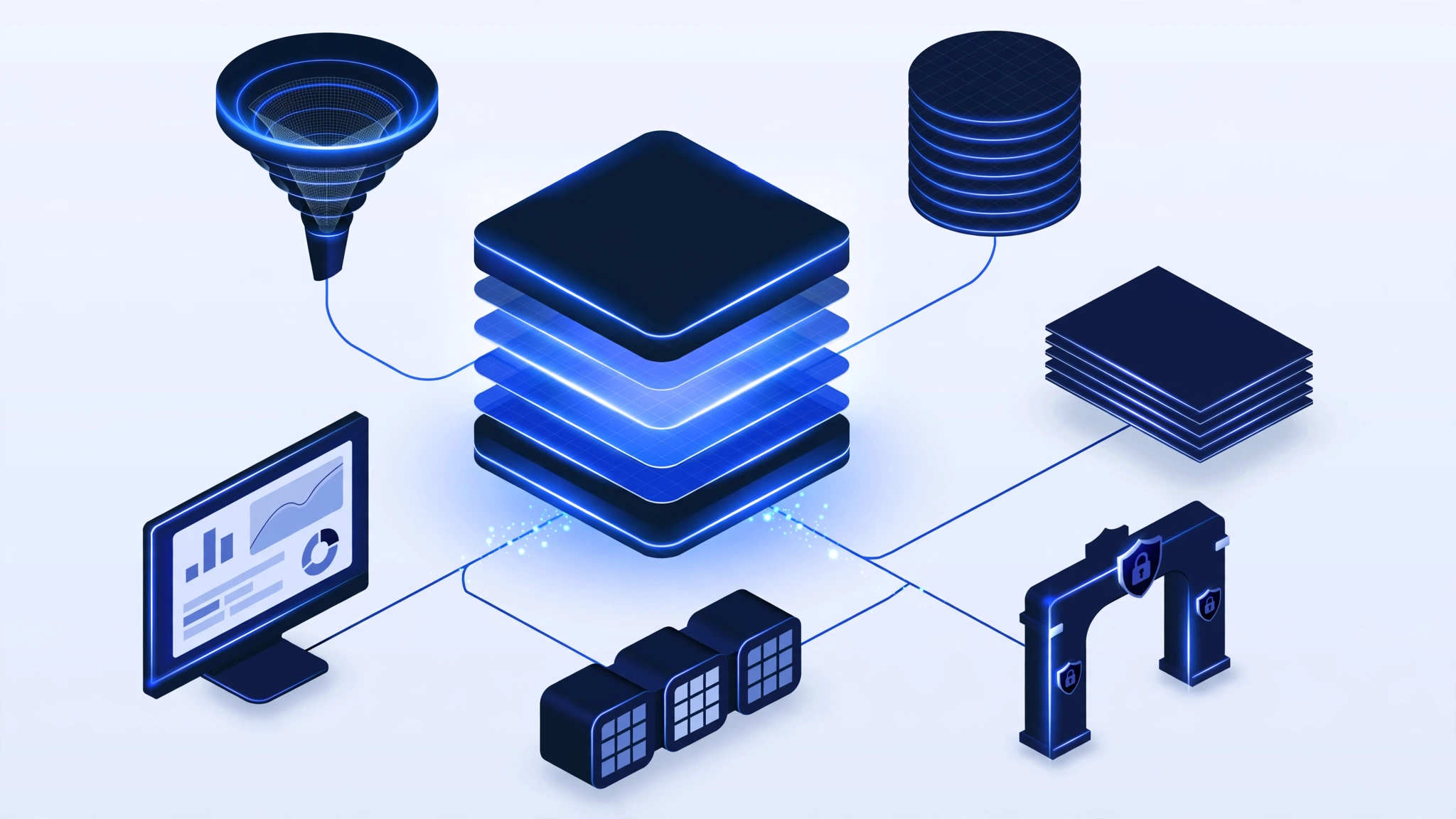
AI is only one part of a complete product. Your development partner may also need to build authentication, databases, APIs, dashboards, billing, monitoring, cloud infrastructure, and administrative interfaces.
Choose a company that can cover the complete application architecture when your project requires it, rather than treating the AI component as an isolated feature.
3. Review Real Projects and Case Studies
A company's portfolio can help you distinguish practical engineering experience from marketing claims.
Look for projects that resemble your requirements in terms of complexity, users, integrations, data, and deployment environment.
When reviewing case studies, ask:
- What business problem did the project solve?
- What did the development team build themselves?
- Which technologies and architecture were used, and why?
- How was the system tested before launch?
- What measurable results or operational improvements were achieved?
- What happened after deployment?
Do not evaluate a provider solely by attractive screenshots or impressive demonstrations. A working prototype and a production-ready application have different requirements.
For example, a production AI assistant may need access controls, reliable retrieval, evaluation datasets, logging, monitoring, and recovery mechanisms in addition to a conversational interface.
Review ProgrammersVenture's software development portfolio for project examples across AI, software platforms, and other engineering disciplines.
4. Assess Security, Privacy, and AI Governance

Security should be part of the architecture from the beginning, especially when an AI application handles confidential documents, customer records, financial information, or internal business data.
Ask potential providers how they will protect your data throughout development and after deployment.
Important considerations include:
- Data privacy: Where will prompts, documents, model inputs, and outputs be stored or processed?
- Access control: Can users access only the information and tools permitted by their roles?
- Data retention: How long are logs and uploaded files retained, and how can they be deleted?
- Prompt injection: How will the application handle malicious instructions hidden in user inputs or retrieved content?
- Output validation: How will generated results be checked before they trigger important actions?
- Human oversight: Which operations require approval before execution?
- Monitoring: How will the team detect failures, unusual activity, and potential data exposure?
For additional guidance, review the NIST AI Risk Management Framework and the OWASP GenAI Security Project.
These resources provide useful frameworks for understanding AI risks and security practices. The appropriate controls will depend on your application's data, users, industry, and risk level.
5. Understand the Development Process
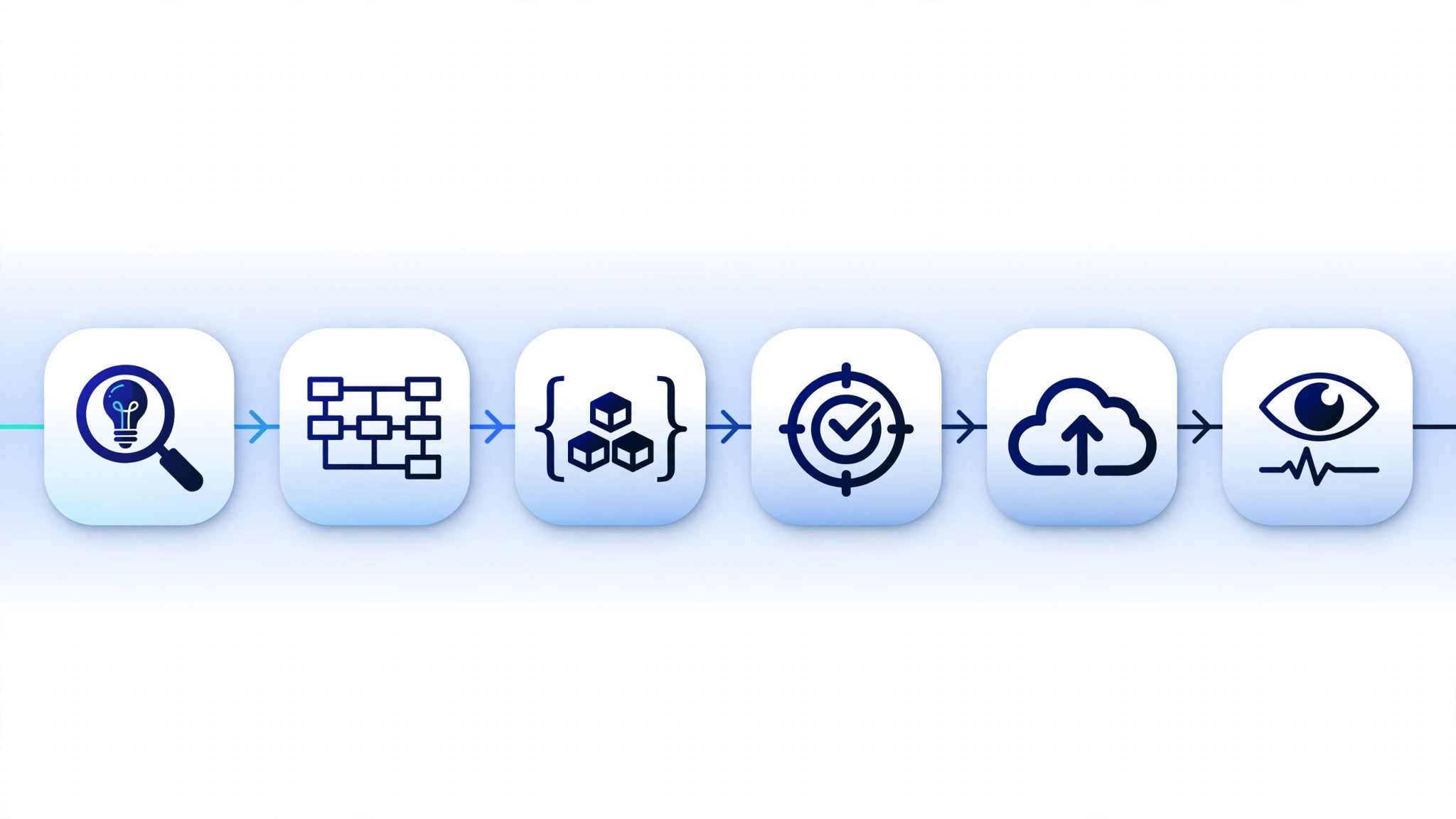
A reliable AI development partner should explain how your idea will move from requirements to a tested, deployable product.
Although the exact process varies by project, a typical engagement includes the following stages.
Discovery and feasibility
The team reviews your requirements, data, integrations, constraints, and success criteria. It should also identify whether AI is necessary for every part of the workflow.
Architecture and proof of concept
The team selects an appropriate approach and validates the most uncertain technical assumptions. Depending on the project, this may include testing retrieval quality, comparing models, or measuring latency and cost.
Development and integration
Engineers implement the application, connect required systems, and develop the user interface, backend services, data pipelines, and AI functionality.
Testing and evaluation
The team evaluates output quality, edge cases, permissions, reliability, security, and performance against agreed criteria.
Deployment and monitoring
The application is deployed to the intended environment with appropriate logging, monitoring, cost controls, documentation, and operational support.
Ask what you will receive at each stage. Deliverables should be clear enough that you can assess progress without relying on informal demonstrations alone.
6. Compare AI Development Costs and Timelines
AI development costs depend on the complexity of the application, data readiness, integration requirements, model usage, security needs, and expected production workload.
A simple AI feature added to an existing application is very different from a multi-tenant enterprise platform with RAG, role-based permissions, billing, and agentic workflows.
The following ranges are illustrative planning estimates, not market averages or guaranteed quotations. Actual prices vary significantly by provider, region, scope, and delivery model.
| Project type | Illustrative timeline | Main cost drivers |
|---|---|---|
| Basic AI feature or prototype | 2–6 weeks | Scope, model integration, interface |
| AI-powered MVP | 6–12 weeks | Core workflows, database, authentication, testing |
| RAG knowledge assistant | 4–12 weeks | Document ingestion, retrieval quality, access control |
| AI agent workflow | 6–16 weeks | Tool integrations, orchestration, permissions, evaluation |
| Enterprise AI platform | 3–6+ months | Architecture, integrations, security, scale, governance |
These estimates assume a reasonably defined scope and timely access to the necessary data and stakeholders. Complex integrations, regulatory requirements, or poor data quality can extend delivery.
When comparing proposals, look beyond the initial development fee. Ask about:
- Model API and inference costs
- Cloud hosting and database expenses
- Data preparation and migration
- Third-party software subscriptions
- Evaluation and testing
- Maintenance and monitoring
- Future feature development
Request a written breakdown of scope, milestones, exclusions, payment terms, and ongoing operating costs. This makes proposals easier to compare and reduces the risk of unexpected expenses.
7. Ask These Questions Before Hiring an AI Development Company
Use these questions during discovery calls or technical interviews to evaluate potential providers.
Technical capability
- Have you delivered a project with requirements similar to ours?
- How would you decide between a standard LLM integration, RAG, fine-tuning, and an agent-based workflow?
- How will you measure accuracy and reliability before launch?
- How will the architecture handle increased traffic and growing data volumes?
Security and ownership
- How will you protect sensitive information and enforce access controls?
- Who owns the source code, application data, and project-specific deliverables?
- Will we have access to the code repository, deployment configuration, and technical documentation?
Delivery and support
- What are the key milestones and acceptance criteria?
- How will you report progress and manage changes in scope?
- What happens if the solution fails to meet agreed requirements?
- What support, monitoring, and maintenance are available after launch?
Strong answers should be specific to your project. Be cautious of providers who promise perfect AI accuracy, guarantee business results without evidence, or cannot explain how they will test the system.
8. Compare Proposals Using a Structured Scorecard

A structured scorecard helps you compare companies on consistent criteria instead of choosing the lowest price or the most persuasive sales presentation.
Rate each provider from 1 to 5 for each category, where 1 means poor and 5 means excellent. Multiply each rating by its weight and divide by 5 to calculate the weighted points.
| Evaluation criterion | Weight |
|---|---|
| Relevant AI engineering experience | 25% |
| Security and data privacy | 20% |
| Architecture and technical approach | 15% |
| Relevant case studies and references | 15% |
| Communication and project management | 10% |
| Cost transparency and total ownership cost | 10% |
| Post-launch support | 5% |
| Total | 100% |
For example, a provider scoring 4 out of 5 on technical experience receives 20 out of 25 possible points for that category.
Use the total score as a decision aid, not an automatic hiring rule. A provider that scores highly overall may still be unsuitable if it cannot meet a mandatory security, compliance, or integration requirement.
9. Recognize Red Flags Before Signing a Contract
Some warning signs are easier to identify before development begins than after money and time have been invested.
Watch for the following:
- Unrealistic guarantees: Promises of perfect accuracy or guaranteed business outcomes without a credible evaluation plan.
- Vague proposals: No clear deliverables, milestones, exclusions, or acceptance criteria.
- Demo-only experience: Impressive prototypes without evidence of testing, deployment, or ongoing maintenance.
- Unclear data handling: No satisfactory explanation of where your information goes or who can access it.
- Unnecessary complexity: Recommending multiple agents or custom models without explaining why simpler options are insufficient.
- Vendor lock-in: Refusing to clarify source-code ownership, deployment access, documentation, or exit arrangements.
- Hidden operating costs: Ignoring hosting, inference, monitoring, or third-party service expenses.
- Poor communication: Delayed answers, inconsistent estimates, or an unwillingness to discuss technical trade-offs.
A good development partner should explain the limitations of its proposed solution as clearly as its benefits.
10. Choose a Partner for Long-Term Success
The best AI development company is not necessarily the largest, cheapest, or most technically fashionable provider. It is the team that understands your objectives, selects an appropriate architecture, communicates clearly, and can demonstrate how it will validate the finished system.
Before making your final decision, confirm that the provider can deliver:
- A clearly defined scope and measurable success criteria
- A practical technical architecture
- Appropriate security and data protection
- A realistic budget and delivery plan
- Access to source code and project documentation
- Testing, deployment, and monitoring
- A clear plan for maintenance and future improvements
If you are still exploring your options, start with a small, clearly scoped engagement that validates the highest-risk assumptions before committing to a larger implementation.
Frequently Asked Questions
How do I choose the right AI development company?
Define your business goals, identify the technical capabilities your project requires, review relevant case studies, assess security practices, and compare written proposals using consistent criteria. Prioritize evidence of reliable delivery over marketing claims.
How much does it cost to hire an AI development company?
Costs vary with project scope, data readiness, integrations, security requirements, and deployment complexity. A prototype may require substantially less investment than an enterprise AI platform. Request an itemized estimate based on your actual requirements.
How long does AI application development take?
A small AI feature may take a few weeks, while a production MVP or integrated AI application can take several months. The timeline depends on scope, data quality, testing requirements, and external dependencies.
Should I hire an AI development agency or an individual developer?
An individual developer can be suitable for a focused feature or a well-defined prototype. An agency or multidisciplinary team may be a better fit when the project requires AI engineering, frontend and backend development, infrastructure, security, and ongoing support.
What is the difference between RAG and fine-tuning?
RAG retrieves relevant information from an external knowledge source and provides it to a model when generating an answer. Fine-tuning changes a model's behavior through additional training. RAG is often useful for knowledge that changes frequently, while fine-tuning may help with specialized behavior or output patterns. Some projects benefit from neither, and the decision should be based on evaluation.
How can I verify an AI development company's experience?
Review relevant case studies, request a technical walkthrough, ask about measurable outcomes, and speak with references when possible. Confirm what the team actually delivered and whether the solution was deployed and maintained beyond the prototype stage.
What should an AI development contract include?
It should clearly define deliverables, milestones, acceptance criteria, payment terms, change requests, intellectual property ownership, confidentiality, data handling, access to code and infrastructure, warranties where applicable, and post-launch support.
How do I reduce the risk of an AI project failing?
Start with a clearly defined problem, validate technical assumptions early, establish measurable evaluation criteria, test real-world edge cases, and plan for monitoring and human oversight. Avoid committing to a large build before validating the most important uncertainties.
Final Thoughts
Choosing an AI development company is a business and technical decision. The right partner should understand your use case, explain the trade-offs, protect your data, and deliver a solution that can be evaluated and maintained after launch.
Compare providers using evidence, not promises. A clearly scoped project, realistic expectations, and a strong evaluation process will give you a much better foundation for turning an AI idea into a dependable business solution.
Looking for an AI development partner?
Explore ProgrammersVenture's AI and machine learning development services or request a project estimate to discuss your requirements, technical approach, timeline, and budget.